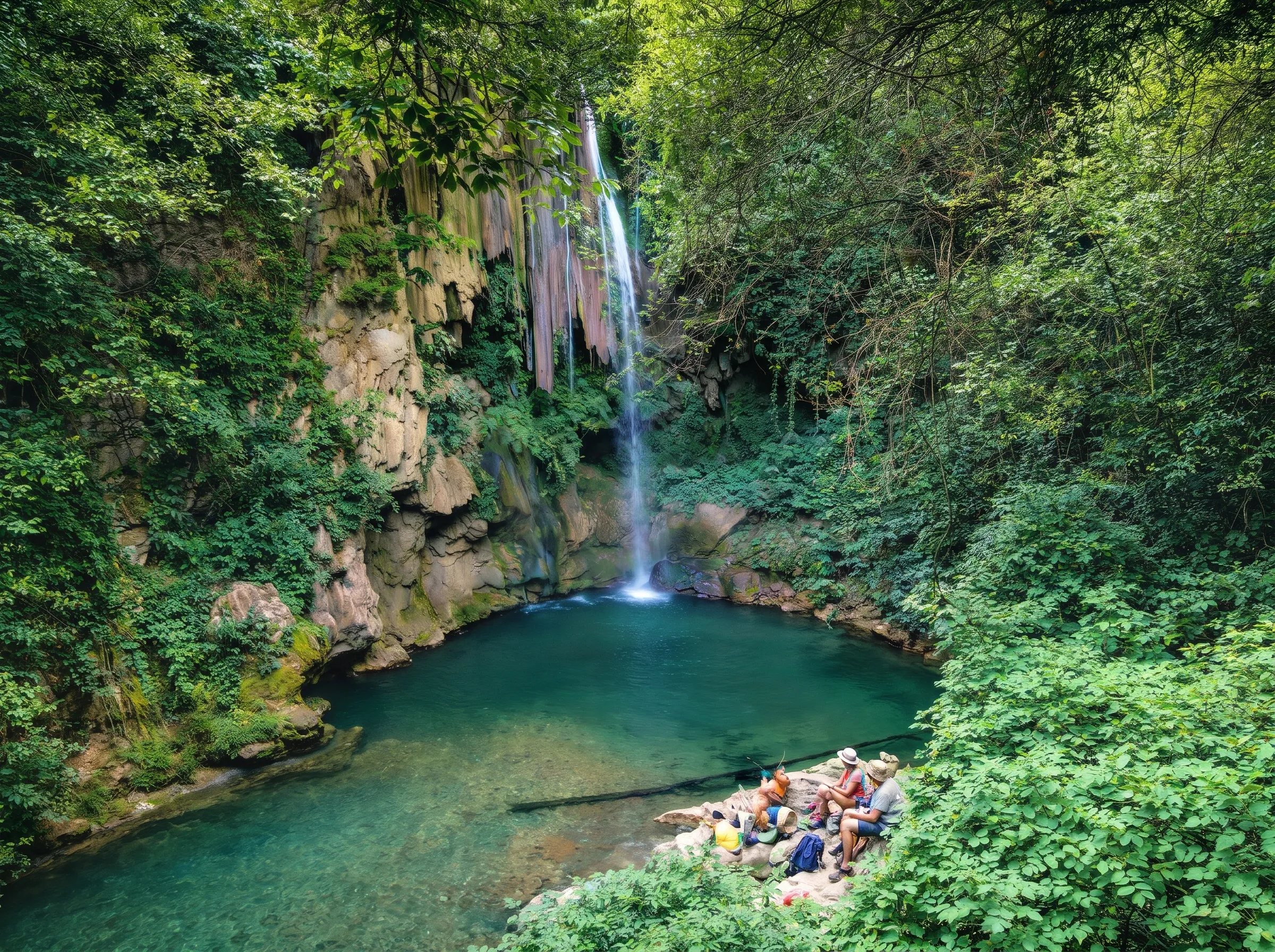
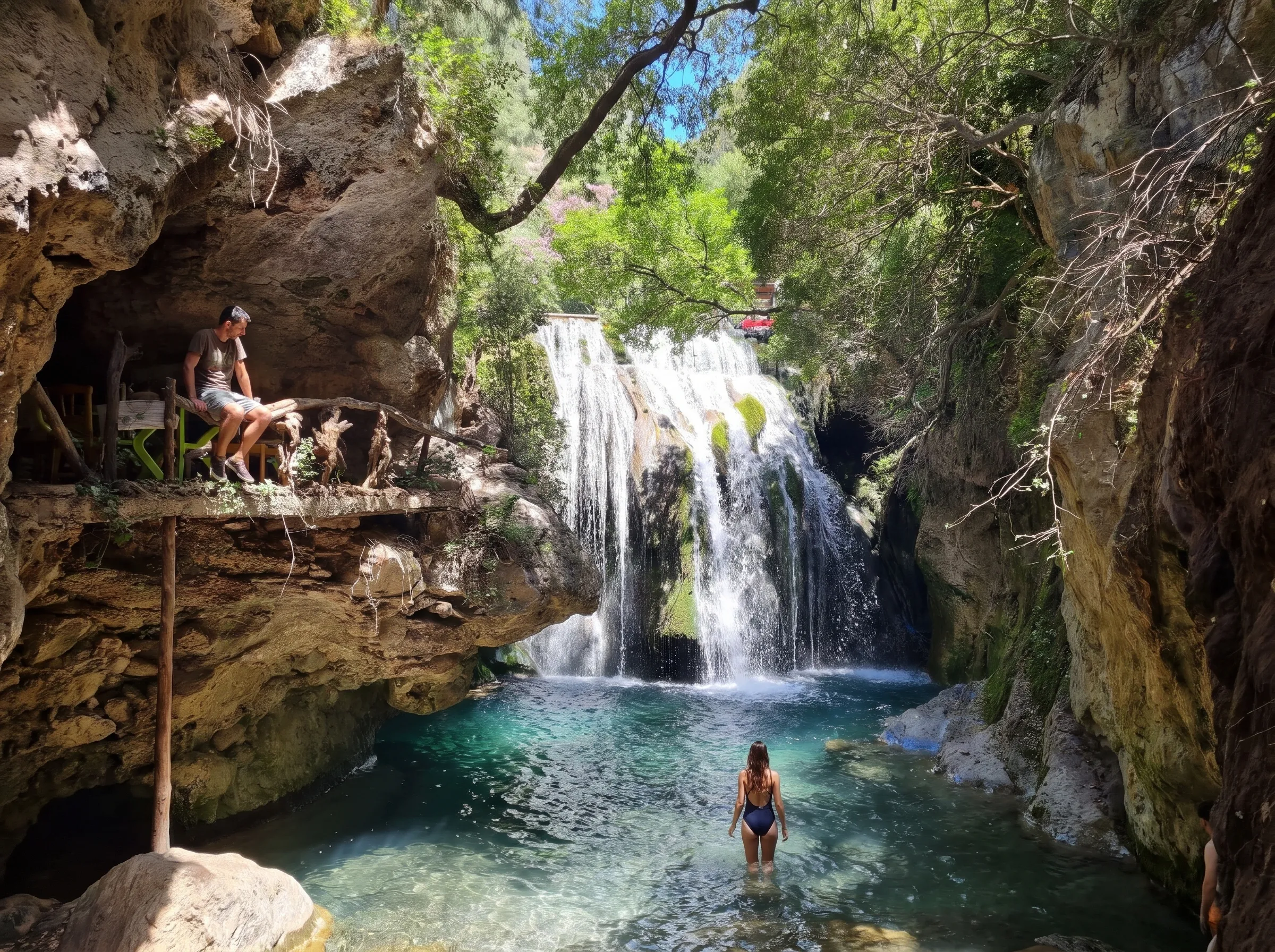
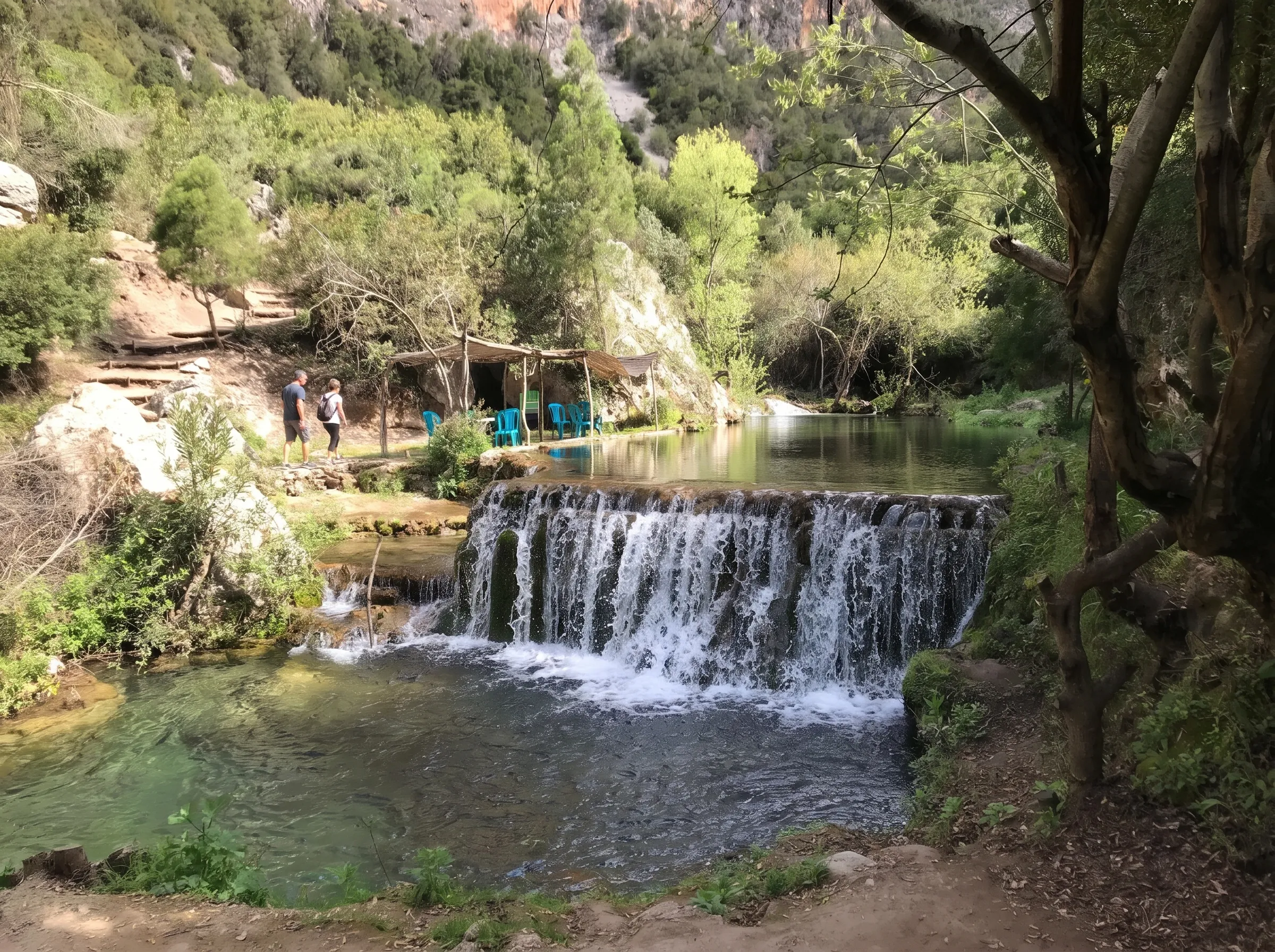
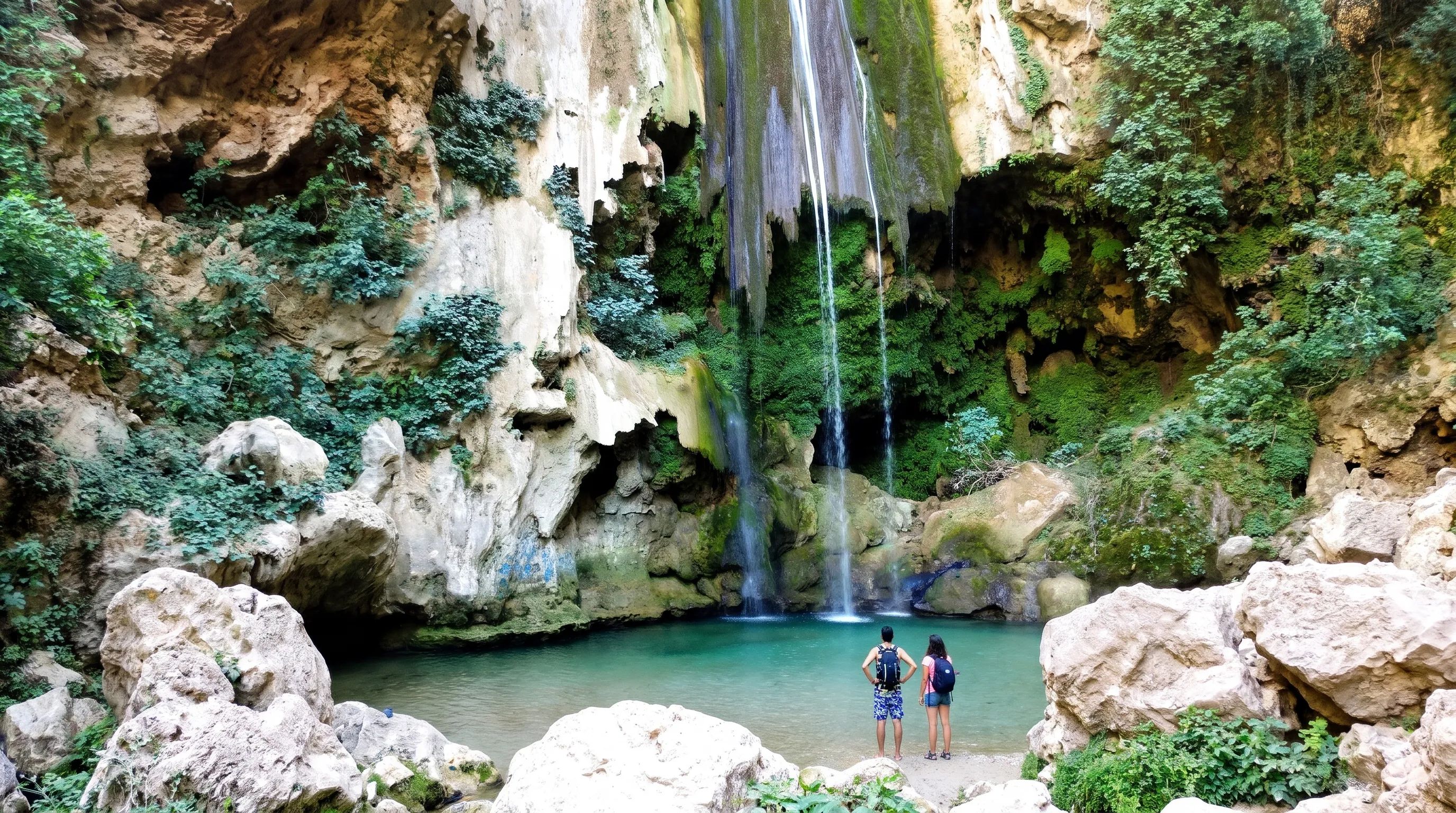
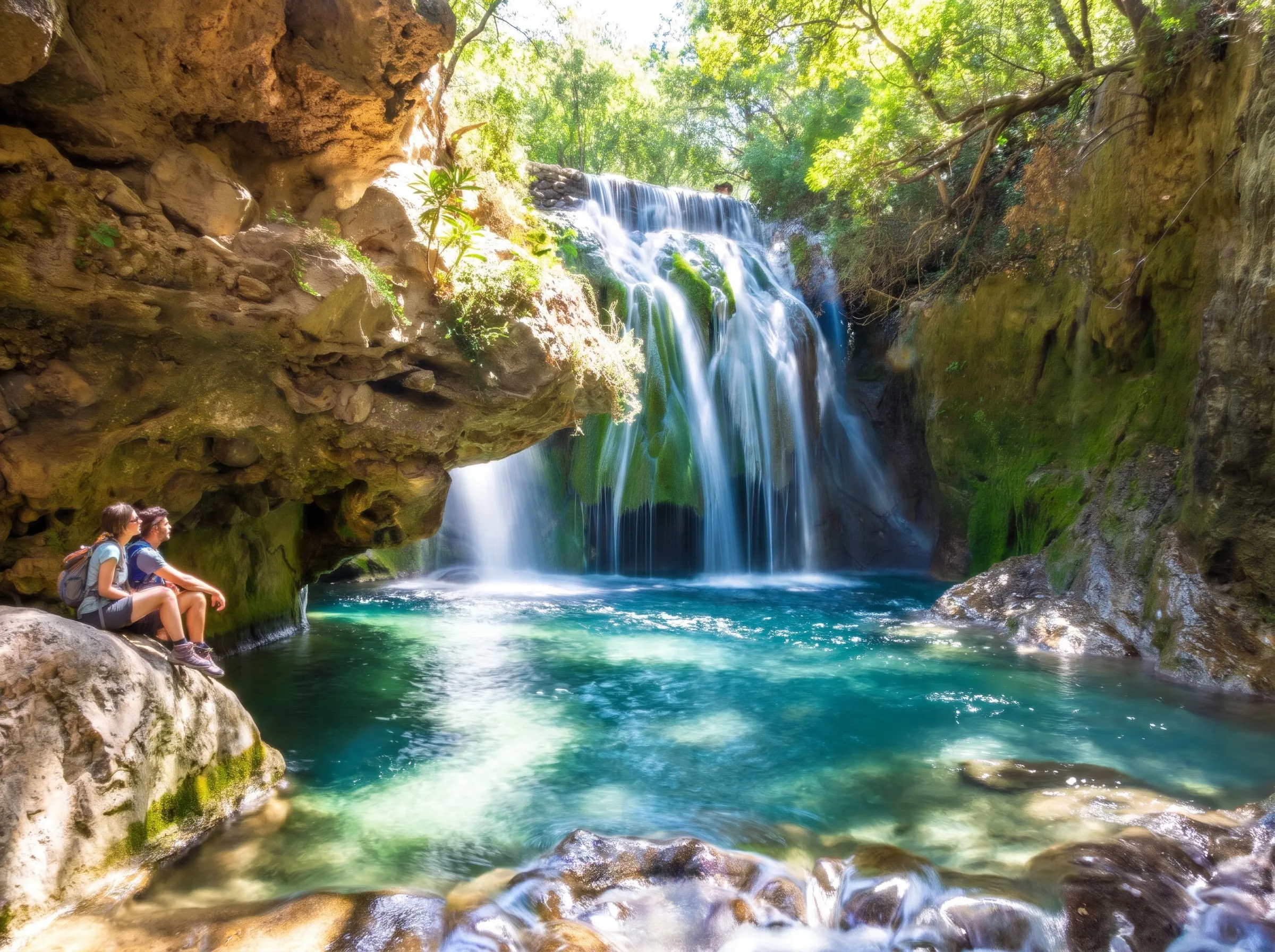
The Akchour Waterfalls are a chain of cascades and pools on a river in Talassemtane National Park, about 30 km from Chefchaouen in northern Morocco. Two trails start at the village of Akchour: one follows the river upstream to the Grand Cascade, the other branches off to God's Bridge.
There is no ticket office or set route. Visitors walk the trails on their own, stop at riverside cafés along the way and, in summer, swim in the pools.
Best time to visit the Akchour Waterfalls
Spring (March to May): the falls carry the most water and the days are mild, the best season for the Grand Cascade.
Summer: warm enough to swim, but the trails are busiest, especially at weekends. By August the Grand Cascade can run dry while the lower falls still flow.
Autumn and winter: autumn rains fill the falls again, but days are cool and the paths get slippery. Skip the trip during or just after heavy rain, when the river crossings can become impassable.
Akchour Waterfalls: questions
- Is there an entrance fee for the Akchour Waterfalls?
- No, the trails are free to walk; only drivers pay a small fee at the car park. Bring cash for taxis and cafés, as there is no ATM in Akchour.
- How long is the Akchour hike?
- The Grand Cascade is about 2 hours each way from the dam, so with breaks and a swim it takes most of a day. God's Bridge is about 45 minutes each way, an easy half day.
- Can you swim at Akchour?
- Yes, many visitors swim in the pools in summer. The water is cold even then, the current is strong near the falls and there are no lifeguards, so do not jump from the rocks.
- Do I need a guide for the Akchour Waterfalls?
- If you come on your own, you can go without one: the paths are clear and easy to follow, and most visitors walk them unguided. Local guides wait at the car park if you want one. Day tours usually include a guide.
- What should I wear and bring?
- Sturdy shoes rather than sandals, as the God's Bridge trail crosses the river over loose, slippery rock. Carry 1–2 litres of water each, swimwear in summer and a rain jacket in autumn and winter.
 Pick your route